Prelude

Welcome to Dice With the Universe!

Generally, I am going to put some thoughts from my life here. They will usually have to do with my translation work or with my writing. Your comments are welcome.

Thanks.

The title of the blog, for those interested, is a part of a paraphrase of Albert Einstein's words -- "God doesn't play dice with the universe." The words originally meant Einstein's scepticism about Quantum Physics (that gives a statistical chance of an event occurring), but I use this phrase as a general guideline to life. Things don't happen randomly. If we want to succeed we need to make it happen ourselves.

Welcome again. Enjoy your stay.
Showing posts with label papers. Show all posts

Wednesday, December 25, 2013

Small addition to previous post

It turns out that our image not only featured in the top images for 2013 by Nature, but was actually also used as cover for their 2013 summary.
Cheers all
http://www.nature.com/news/specials/2013-1.14378

Friday, December 20, 2013

Updates

I know, I know, it's been a long while since I last posted. I could probably launch into explanations as to why that is, but I won't.

So, a few things happened lately that require some updates. First of all, I passed my comprehensive exam and was officially accepted into candidacy for PhD. I had fun writing the written proposal since it was on the subject that I would like to research in real life if/when I get a faculty position. This last semester I also sat in a class on grant writing and it was very helpful in preparations for the comprehensive.

I also received a fellowship from the Nebraska Center for Materials and Nanoscience (NCMN), with a small press release on the subject. Always good for ego-stroking.

On with the updates!

The paper in Advanced Functional Materials finally got out in an issue (as opposed to a preliminary view). In addition, it got to be a front piece with an image designed by Joel Brehm.


The paper also received a press release from UNL, which is always nice.

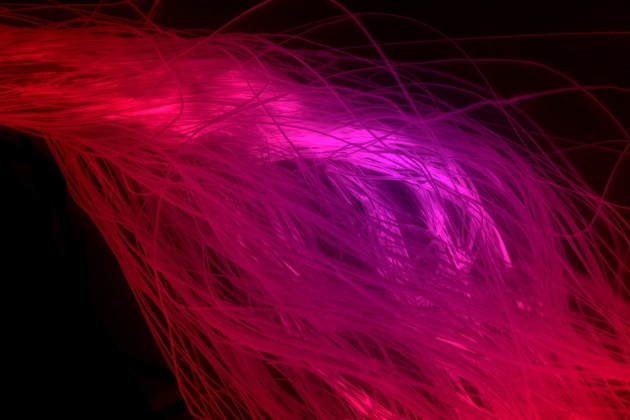
Surprisingly, we got a very nice present for the end of the year, as our image was included among the images of the year by Nature. I think I will take this opportunity to post that nice image again :-)


I think that's about it for now. Hopefully, this blog will have more good news in the next year. Happy holidays to those who might happen to read this.

Cheers all

Thursday, June 20, 2013

Paper out at last

The paper in the Advanced Functional Materials is out at last (at least on the Internet). It can be found here.

Friday, April 26, 2013

Hilarity ensues

Well, it was only a matter of time with the publicity surrounding the paper. Those who can read Russian are welcome to check out the link. The problem, of course (beyond the rather sensationalist coverage), is that I have as much to do with Russia as with ballet. I was born in Ukraine when it was still a part of USSR. I came to Israel with my parents when I was a child of 13 (USSR still existed at the time). So, any connection to Russia is, as they say, purely coincidental :-). Incidentally, it is interesting that they didn't try to claim Dr. Dzenis as having connection with Russia, though he left the USSR as an adult and has a PhD from Riga University. Then, there is the claim that I have a Masters in EE. I wish. I tried to start Masters in EE when I was in the army. Unfortunately, it didn't work out and I only took a few courses. And, finally, we are obviously not from Akron. Only Dr. Cheng who is a coauthor on the paper is. I guess these reporters at least tried to find out a bit about us (most likely found my Linked-in profile). It is more than I can say about other articles. In most cases people very obviously didn't read the paper, but only the JournalStar article or even subsequent coverage (it is like watching a children's game of "broken phone"). It is funny nonetheless.

Thursday, April 25, 2013

Some explanations about the paper

Well, given the increased attention and articles about our recent paper, I decided to write a short explanation of what it actually says and the implications for those who are interested but can't read the paper behind the paywall or not interested in wading through it.

First, a short description of what was done. We used electrospinning to produce continuous fibers with diameters between ~100 nanometers and a few microns (for comparison, human hair is about 100 microns in diameter). For those unfamiliar with the process, electrospinning, similar to electrospraying, applies high voltage to a solution of polymer (you can also use a polymer melt, but it's less versatile and more complicated). Above a certain polymer concentration this process produces fibers that are deposited on a collector (in regular cases it produces a random mat and you need a special electrode to produce oriented or individual fibers). The diameter of the fibers is controlled by different process parameters and can be as low as few nanometers for some polymer systems (in our case we tested fibers as thin as ~100 nanometers).

After making the fibers we mechanically tested them. Other people previously tested such nanofibers, but usually on very short samples (several tens of microns)and the examined diameter range was much narrower. What we saw was that the fibers became much much stronger as they got thinner. This is not entirely unexpected (there are theories that predict this effect), though the magnitude of this size effect was beyond what we've expected. What was unexpected that the deformation to failure did not decrease with the increase in strength, which led to smaller fibers being able to absorb significantly more energy (expressed as toughness) than the large ones (toughness is the area under the stress/strain curve).

Now, optimally, one would have liked to examine the structure of individual nanofibers, but examining crystal structure of such small samples is rather difficult (especially for polymers). We examined crystallinity of nanofiber mats (with distribution of diameters) and found that it decreased slightly for mats with thinner average diameter. This led us to hypothesize that our increase in toughness is associated with the low and decreasing crystallinity. In order to validate the hypothesis we intentionally increased crystallinity in our fibers by heating them up. After this process, we found that the deformation the fibers were able to take before breaking decreased significantly (and thus the toughness of the fibers decreased as well). We also made an effort in the other direction (to decrease crystallinity), and found, as expected, that the toughness increased, but there were confounding effects and we decided to leave this part of the experiments for future papers.

Now, for the claims out there and for the implications of our study. As it stands, taking the fibers and using them is still a long way off. Controlling the diameter and scaling things up is not trivial. Furthermore, though the strength of our fibers is relatively high for the thinnest filaments, it is just starting to push the advanced fibers which are used in composites, armor etc. The bigger problem though is that the large toughness comes from large deformations, which is not very useful for many applications (in ballistics, for example, you are interested in the first 10% deformation and how much energy you absorb there). So, while the results are promising, it is waaay too early to talk about shirts that can stop bullets :-) The study does offer some possible paths forward. I don't want to go into too much details here, but there are possibilities to try and tailor the properties, by sacrificing some of the toughness at high deformations to get higher strength etc. In addition, the discovery that the low crystallinity might be a good thing is very unusual and goes against what people regularly do to produce advanced fibers. I hope this helps to clear some of the clutter out there. Or maybe it just confuses people who ventured here to read this post even more :-)

Wednesday, April 24, 2013

Now this is getting silly

Well, not so much silly, but definitely an uncharted territory for me. Literally almost two dozen different versions of news coverage of the paper are out, and new ones popping up all the time. https://news.google.com/news/story?pz=1&cf=all&ned=us&hl=en&topic=snc&ncl=d1_FY25uvPAQoAMBjzQeUH9jrgZgM&cf=all&scoring=d

whew

The coverage of the paper gets somewhat crazy, I have to admit. NSF press release Article in the local paper. I also was notified today that the paper from our collaborators at Northwestern where I am a second author got accepted into Carbon.

Tuesday, April 23, 2013

Cover, press release etc.

Well, it's been another good day on the professional front. Our cover of ACS Nano came out today. And the University also published a press release. I also received an Outstanding Research Assistant Award today. All in all, pretty good day.

Friday, April 12, 2013

A good day (more news on the papers)

Well, I have to say that I didn't anticipate such a rush of publicity for our recent paper. After being featured in Nature, it is also got the cover of the upcoming issue of ACS Nano and, in addition will be featured in Nano Today and Materials Today. There also was a phootoshoot of our group for a University press release on the subject. My advisor was also invited to write a feature article on the subject for Polymer with a promise to appear on the cover as well. All this is kind of overwhelming. In a good way, though. This day of good news was topped by the fact that another of our papers was accepted with really minor revisions to another pretty big journal. Lots to be cheerful about (there is, of course, Israeli Independence day coming next week as well :-) )

Wednesday, March 20, 2013

Paper is out

Well, the paper i mentioned earlier is finally officially out on the ACS Nano webpage. As promised, there is more. The paper was also highlighted in Nature.

Friday, March 15, 2013

Some good news

Well, apparently good news come in packs. There are some very exciting things happening with the paper I mentioned in my previous posts. I will update once those are finalized. In the meanwhile our previous paper got a news release on the University of Nebraska -- Lincoln web page. It's, obviously, not the Washington Post, but it is still cool.

Wednesday, March 6, 2013

Paper publication

The paper I mentioned in the previous post had been posted on-line as a pre-publication process in ACS Nano. It's been an interesting journey with this paper, to say the least. Some of it good, some of it bad. What is remarkable, is that it showed very strongly to me that although science is supposedly objective, in reality it is subjective in many respects, or, at least, open to interpretations :-) Anyway, here is the link to the prepub. I will post a link on the side bar when the paper is out officially.

Monday, February 25, 2013

Another paper

Another paper was finally accepted (updates forthcoming). The reviewer comments also were extremely positive.

Wednesday, December 26, 2012

Paper out

Well, finally... My first paper was published on-line. In case anybody is reading this and is interested, the paper can be founded here http://pubs.acs.org/doi/abs/10.1021/nn303423x The other papers are as they say "in the pipeline" and hopefully, I will be able to say something on the subject soon. Cheers and Happy New Year